
Support / Guides / Do You Need a Storage Tank with a Bigger RO Class?
A bigger class without a tank plan is how “upgrade” still feels empty at 7am.
Do You Need a Storage Tank with a Bigger RO Class?
For: Myanmar home buyers confused about tank + bigger RO class
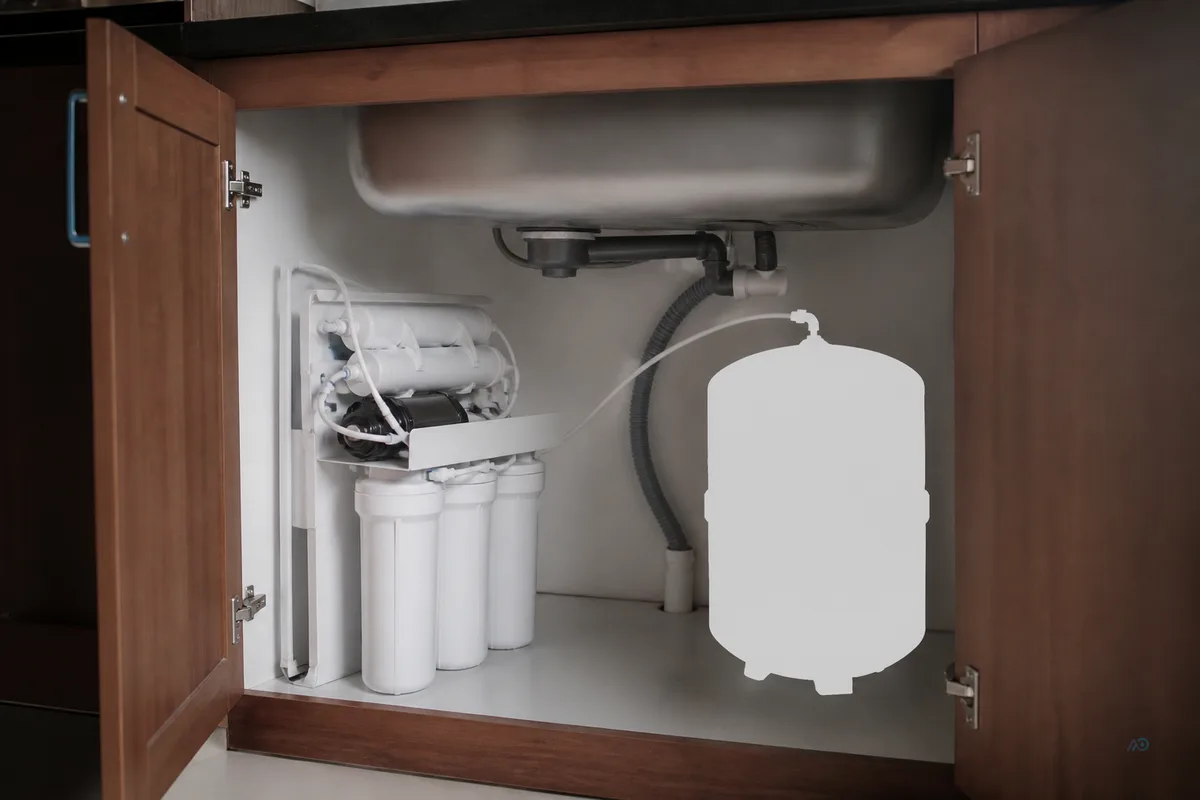
Buyers often chase a bigger GPD sticker and forget the tank entirely, treating the class name as the whole decision.
Then 7am arrives. The class name looks stronger on the box, exactly as promised. The jug still empties, because peak draw outruns what the system can buffer in a short window — or because there was never any real space set aside for a proper tank path in the first place.
Nobody feels cheated by the sticker itself; they feel cheated by a gap in the buying conversation that nobody flagged in time.
This guide separates class sizing from tank planning, two decisions that get merged into one and then made badly.
Kept separate, each decision is simple. Merged together, they produce exactly the kind of quiet disappointment described above.
The upgrade that still felt small
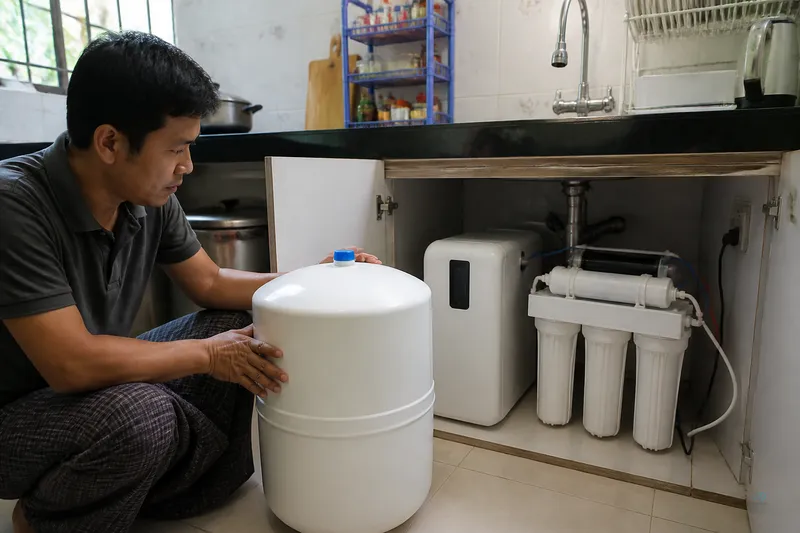
A family in Hlaing replaces their small under-sink RO with a unit advertised as a meaningfully bigger class, expecting the morning rush problem to disappear. Two weeks later, they are frustrated: the new unit is undeniably faster than the old one, yet the jug still runs dry most mornings before everyone leaves for school and work.
The missing piece turns out to be simple. Nobody discussed a storage tank during the sale, and there was never space cleared for one under the counter. The new unit produces water faster than the old one, but it still produces it at a steady rate — it cannot instantly fill a jug the moment five people reach for water in the same five minutes. Without a tank to buffer that short, intense draw, even a genuinely bigger class still feels thin at the exact moment it matters most.
The family had, in effect, paid for a faster tap without buying anywhere to store what that tap produces ahead of time.
Why storage shows up in "available when needed"
JMP's safely managed drinking-water idea includes water available when needed — not simply water that exists somewhere in the pipe network. Myanmar's roughly 60% safely managed drinking-water coverage in 2024 (JMP-linked SDG 6 Data) is the national backdrop; your cabinet's tank space is the local plot that decides whether peak hour feels solved. In home RO terms, peak minutes matter more than average hours spread across a full day. A storage tank is one practical way households buffer short, intense draws — school bottles, tea, rice wash — against how fast the membrane side can actually refill in real time.
That is engineering common sense, not a promise that any tank size fixes every building's problems. Pressure and space still decide what is genuinely possible — low pressure · install checklist.
A tank cannot manufacture water that a weak feed line never delivers in the first place; it can only redistribute what does arrive more evenly across the hour.
What the tank is for, in plain language
- Cover simultaneous draws in a short window, rather than forcing everyone to wait in sequence
- Reduce the feeling that everyone in the house waits on membrane speed alone
- Pair naturally with a capacity class that already matches real peak demand — morning rush · hidden load
Class first or tank first?
Honest order, in the sequence that actually protects a buyer:
- Name peak jobs and clock times before discussing any product
- Check cabinet and plant space for the unit and a tank together, not one at a time
- Note pressure and any intermittent supply patterns in the building
- Only then talk class — including whether RO Machine 400GPD genuinely belongs
Skipping step 2 is exactly how the Hlaing family ended up with an upgrade that still felt small three months in.
Four steps, in this order, cost nothing extra to follow and prevent the exact mistake this guide opened with.
Space is a buying fact, not a detail to sort out later
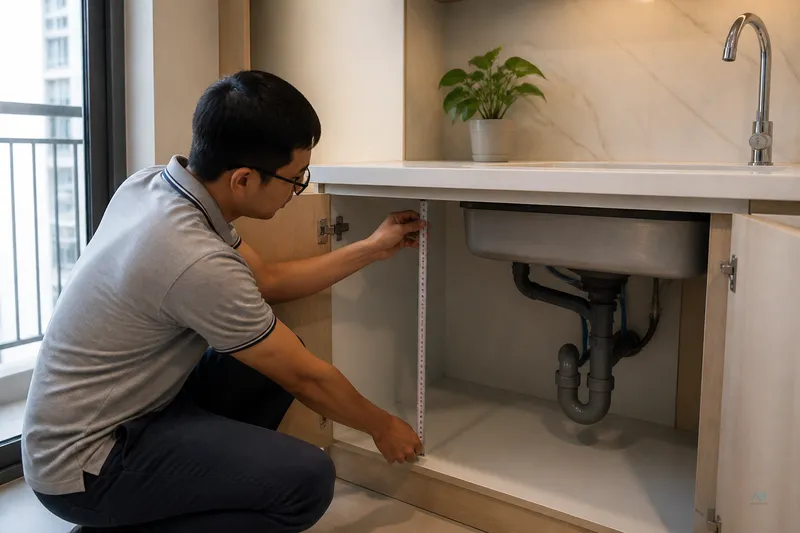
Measure depth, height, door swing, and service access for filter changes before falling in love with a specific model. Photos beat guesses every time a seller asks about your kitchen. New apartments especially benefit from checking this early: new apartment checklist.
A cabinet that looks "big enough" for the unit alone often has no realistic room left for a tank once measured properly — and that gap is invisible until someone actually opens the door with a tape measure.
Ask any installer who has done this work for years, and they will describe the same recurring moment: standing in front of a cabinet that clearly fits the unit, and clearly does not fit both the unit and a tank, on a day when the buyer already assumed both were settled.
Heat, guests, and school weeks stress the buffer

Hot-season drinking spikes and festival guests punish undersized buffers precisely when a family can least afford the frustration — hot season · Thingyan / guests. If bottled water has quietly become your real peak-hour plan, the tank-and-class conversation is already overdue, not merely upcoming.
These stress events tend to arrive at predictable times of year, which means the buffer question can be answered calmly, well ahead of the next one.
When RO Machine 400GPD-class enters the tank talk
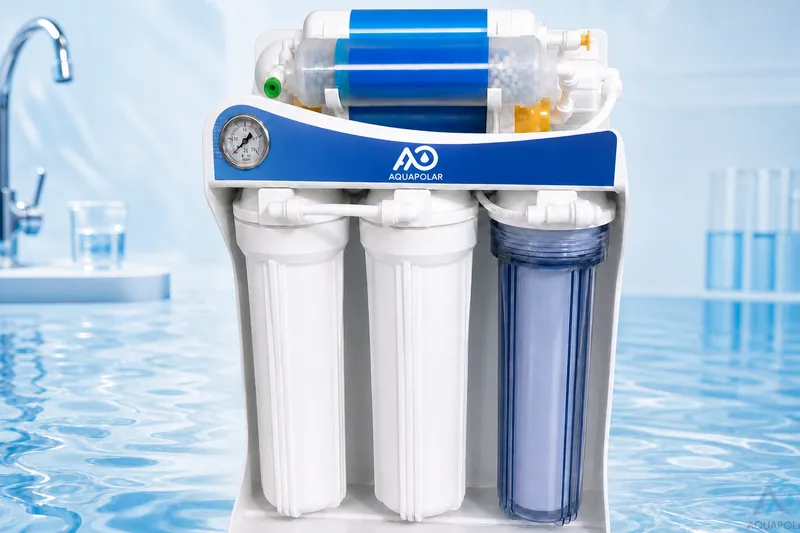
Discuss RO Machine 400GPD as a capacity class name — not a daily gallon guarantee — when peak demand is genuinely above a small home pattern and you are willing to plan real space for the whole path, not just a sticker with nowhere to put a tank.
Product: RO_400GPD · who it fits · what 400GPD means.
Avoid price-only and friend-copy shortcuts that ignore space entirely, because a friend's cabinet layout is rarely identical to yours.
What the Hlaing family did next
After the second technician visit identified the missing tank as the real problem, the family cleared a small additional space beside the existing cabinet and added a properly sized buffer tank to their existing unit. The class they had already bought turned out to be correct all along — the household simply needed the buffer that nobody had planned for at the point of sale.
Within a week of the tank install, the morning routine changed noticeably: the jug stayed full through the entire rush, and nobody reached for a bottled backup for the first time in months.
How to picture what a tank actually buys you
A useful way to picture the difference: a membrane produces water at a steady rate, almost like a tap that drips at a fixed speed no matter how urgently you need it. A tank is a small reservoir that fills slowly during quiet hours and releases quickly during a rush, the way a kettle holds hot water ready even though the stove itself heats slowly.
Without that reservoir, every single glass drawn during peak hour competes directly against the membrane's steady, unhurried production rate. With it, the household draws from stored water first, and the membrane quietly catches up during the calmer hour that follows. The class decides how fast the membrane refills the tank; the tank decides how well a short rush feels absorbed in the moment.
What happens when nobody plans for the tank
Skipping the tank conversation does not usually cause a dramatic failure on day one. It causes a slow erosion of confidence instead: the household notices the new unit "isn't that different," starts keeping a few bottles in reserve just in case, and eventually stops trusting the RO as the primary source for anything beyond casual sipping. The bottled-water habit creeps back in exactly the way it did before the upgrade, and the money spent on a bigger class quietly stops paying for itself.
Send this on Viber

- Peak window and the water jobs sharing that hour
- Cabinet photos, taken with the door open
- Pressure notes, if you already suspect an issue
- Details on your current machine, if you have one
- "Advise class and tank space together, not separately."
Viber 09668896889 · Get Quote · Showroom
Renting a flat versus owning changes the space conversation
Renters often hesitate to ask a landlord for permission to install a tank, assuming it counts as a major structural change. In most cases it does not — a small buffer tank fits within existing cabinet space and rarely requires anything beyond a plumber's normal work. The bigger obstacle for renters is usually psychological: a reluctance to invest in tank space for a home they may leave in a year or two.
That hesitation is understandable, but it is worth weighing against the alternative — a year or two of bottled-water spending and morning frustration in a home that was never actually sized correctly for the household living in it.
A short conversation with the landlord, framed as a minor plumbing addition rather than a renovation, usually resolves the concern faster than expected.
Related
Ready to plan class and tank together?

Do not buy the class without the space story attached to it. Ask whether 400GPD-class fits your peak and your cabinet — as one conversation, not two separate purchases made months apart.
The Hlaing family got there eventually. A single upfront conversation would have saved them the two-week wait and the second technician visit.
Message on Viber, request a quote, or visit the showroom with your cabinet measurements in hand.
Related products
Next step
Request a quote, or use Viber for Myanmar local support.
More guides: Support guides