
Solutions / Guides / RO Spare Parts Reorder in Yangon — Before You Run Dry
The machine did not fail. The reorder did.
RO Spare Parts Reorder in Yangon — Before You Run Dry
For: Myanmar RO owners and shops who need a local reorder path
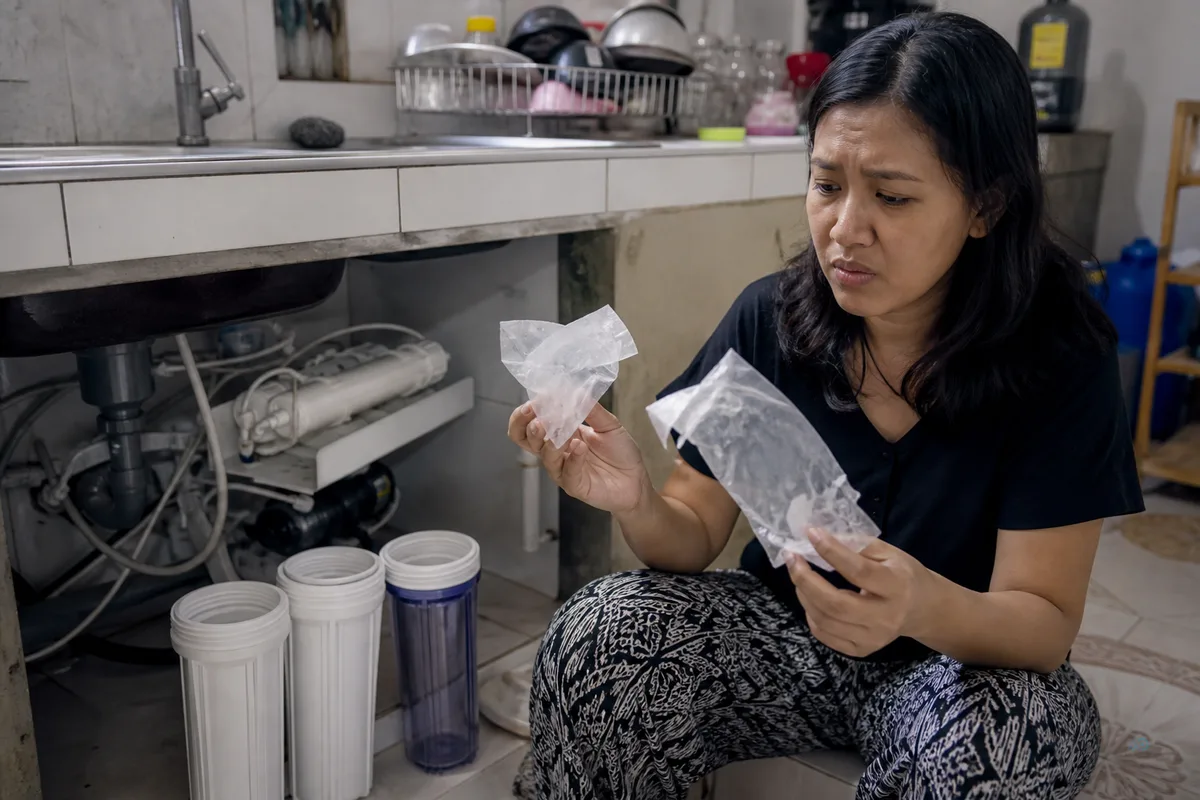
Most "sudden RO failures" in Yangon are not sudden, and they are not really failures of the machine.
The jug went slow for two weeks before it stopped. Taste drifted, and everyone kept drinking it anyway while agreeing to "check it soon." Pressure felt a little wrong for a while. Then someone finally looked — and discovered that the Facebook seller who sold the machine eighteen months ago no longer answers messages, and nobody ever wrote down what was fitted inside it.
This guide is about one habit that prevents almost all of that: reorder RO spare parts in Yangon before you run dry, with a local path you can actually message when the day comes.
That habit costs almost nothing while the machine is still working well. It becomes expensive only once it has been skipped for a year and the record everyone was relying on turns out to be a memory, not a photo.
WHO/UNICEF JMP framing treats safely managed drinking water partly as water that is available when needed. A Yangon home or shop that runs dry because the reorder window closed fails that test at the worst hour. Against Myanmar’s unfinished WASH coverage — about 60% safely managed drinking water in 2024 (JMP-linked SDG 6 Data / UN-Water) — spare parts are infrastructure, not an afterthought.
The half-buy problem
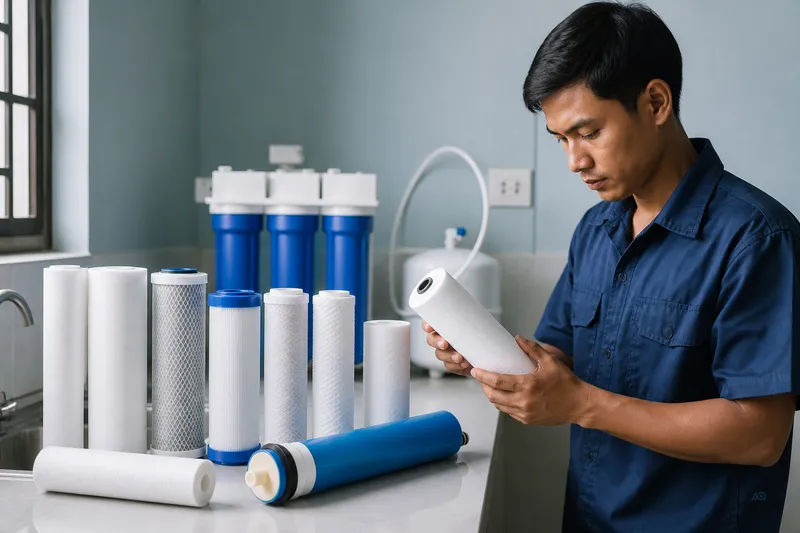
Buying an RO class — home or light commercial — without also building a parts habit is one of the most common ways peak-hour convenience turns into a bottled-water emergency. The machine itself was never the weak link. The missing second half of the purchase was.
You need a clear, written answer to three questions, ideally answered on the day of installation rather than reconstructed later from memory:
- Which pre-filters and membrane does your specific class actually use?
- Who stocks them locally in Yangon when the day comes that you need them?
- How do you reorder without inventing a fake "lifetime free parts" story that nobody actually offered you?
Start on the commercial hub: RO Spare Parts Yangon. Installers who need parts ready before a job, rather than owners planning a personal reorder, should read the installer ready-stock guide and ready stock.
Both audiences are asking the same underlying question — "will the right part exist when I need it" — just from opposite ends of the same job.
What usually goes wrong

- No list exists of what is actually fitted on the machine — only a vague memory of a Facebook photo from over a year ago
- Waiting for zero flow before messaging anyone, turning a planned reorder into an emergency one
- Photo-only sellers who disappear after the first sale, leaving no one to answer the reorder question — see local support vs one-time seller
- Panic buys of the wrong size, because the label was never recorded and nobody wants to open the housing to check under time pressure
- Treating spare parts as an afterthought while sizing decisions focus only on the sticker GPD number
Peak demand makes late reorders louder and more painful — see morning rush and commercial when home class fails for the shop-scale version of the same problem.
None of these five patterns require a defective part or a bad seller to happen. They happen to ordinary machines in ordinary households, simply because the reorder step was never given the same attention as the purchase decision.
Why the timing feels invisible until it isn't
Filters and membranes do not fail with a dramatic announcement. Performance drifts slowly enough that a household adapts without noticing — a slightly slower fill becomes normal, a faint taste change becomes "just how the water tastes now." By the time the drift becomes undeniable, the part may already be well past due, and the household has lost weeks it could have used to plan a calm reorder instead of an urgent one.
This slow-drift pattern is exactly why a written record beats memory. Memory adapts to gradual change; a written filter-change date and a labelled photo do not.
Rainy season adds a second reason to check early
Feed water can shift with the season — turbidity and taste can change after heavy rain, and pre-filters that were coping fine in the dry months can load up faster once the rainy season starts pulling more sediment through the supply. That is a normal, expected seasonal pattern, not a sign anything is broken.
What it means for reorder timing is simple: a filter that "still had a bit of life left" in March may not stretch as far once monsoon feed water changes the load on it. Checking your parts list before the rains start, rather than after taste or flow already changed, keeps the reorder a routine task instead of a surprise.
Why one missing record causes the whole problem
Almost every panic reorder we hear about traces back to the same missing piece: nobody wrote down what was fitted on installation day. Without that record, a straightforward reorder becomes a small investigation — opening housings, guessing sizes, hoping a photo from years ago still shows the label clearly.
That single gap is worth closing today, even if your machine is running perfectly right now. It costs five minutes and a phone camera. It saves an entire stressful afternoon later.
A simple Yangon reorder rhythm
You do not need a laboratory-grade maintenance schedule for this page to be useful. You need a local rhythm that fits how Yangon households and shops actually operate:
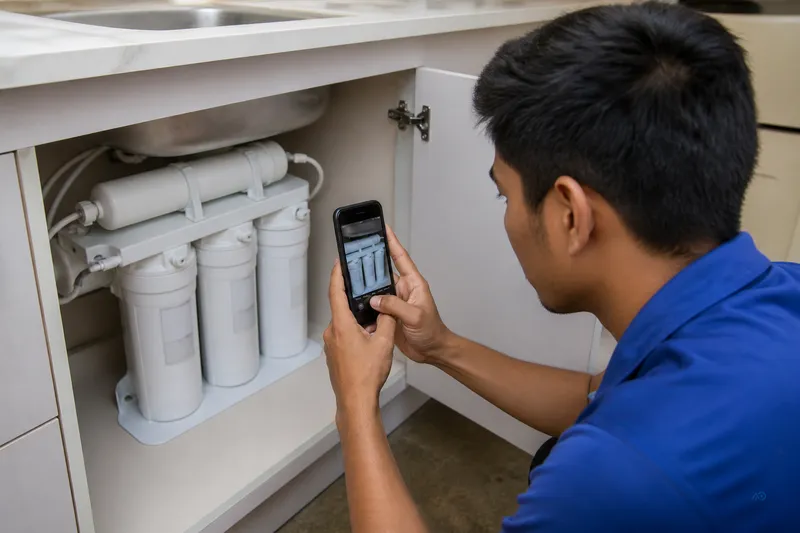
- Note the install date and exactly what was fitted — photos of the housings and any printed labels help more than memory ever will
- Watch for the early signs, not just the late ones: slightly slower fill, a taste change, a pressure complaint from whoever drinks the water most
- Message before the service week you genuinely cannot afford to miss — a festival, a school term, a hot spell
- Confirm stock claim-safely — we do not print warehouse counts on a blog line and call it permanent; ask ready stock or Viber for your specific parts, this week
Browse categories from the hub — membranes, filters, and related lines under /products/spare-parts.
None of these four steps require you to become an expert in RO maintenance. They simply require treating the reorder as part of owning the machine, not as an optional extra you deal with only when something already feels wrong.
What to send so the reply is actually useful
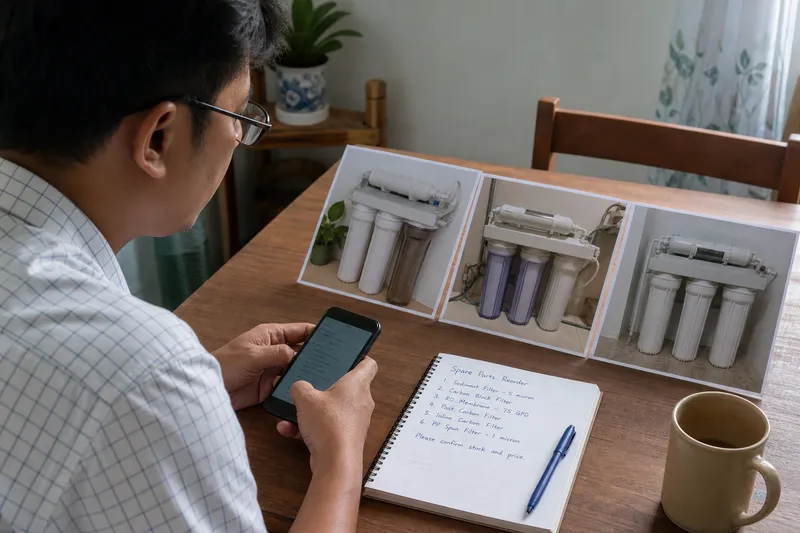
Copy-paste on Viber:
- Home, shop, or hotel — and your township
- Machine class if known, for example a conversation around RO Machine 400GPD-class — a class name, never a daily gallon promise
- Photos of the unit, and of the filter or membrane labels if you can get to them
- What feels wrong right now — slow, taste, or empty at peak hour
- Whether you need parts this week or are setting up a planned reorder for later
Viber 09668896889 · Get Quote — spare parts · Showroom · Supplier
A reply usually comes back the same day with what we can confirm, and what needs a short lead time.
Filter fear is normal — silence is the expensive part
If you have been delaying because filter changes feel confusing or intimidating, that hesitation is common and understandable — read filter change fear — what to ask before you decide anything. Fear without a local path to ask questions tends to turn into a second wrong purchase, not a solved problem.
Warranty terms, exact stage counts, and stock levels are confirmed for your order specifically — never invented on a page like this one.
Asking a "beginner" question about filter changes does not mark you as a difficult customer. It is exactly the question we would rather answer on a quiet Tuesday than during a Thursday-morning emergency.
Peak week is the wrong week to learn the label
School term, hot season, Thingyan, or a shop's lunch rush — those are precisely the weeks a household or business needs reliable water, not a scavenger hunt through old photos trying to identify the right membrane size from memory.
Take housing photos on an ordinary, calm day. Save them somewhere you can find again. When Viber asks "what is fitted on the machine?", you answer in minutes instead of guessing under stress with a queue of thirsty people behind you.
The shop version of the same story
Shops and small hotels run into a sharper version of this problem, because the cost of a slow reorder is not just an inconvenienced household — it is a queue of paying customers watching the tap run slow. A lunch-rush kitchen that discovers a spare-parts gap at 11:45am has no good options left; every choice at that point costs money in a way a home reorder usually does not.
The fix is the same discipline, just with a shorter tolerance for delay: know your parts, know your local stock contact, and reorder on a calendar, not on a crisis. If your business has already outgrown a home-class machine entirely, that is a separate and equally worth-having conversation — see commercial when home class fails.
A five-minute task worth doing today
If you take nothing else from this page, take this: open your machine's housings today, take three photos, and send them to your own Viber chat with yourself, labelled with today's date. That single action is the entire foundation of a reorder habit, and it costs less time than reading this guide did.
Related
- Spare parts hub — primary keyword page
- Installer parts ready stock
- RO systems
- Waiting until the old purifier dies
- FAQ
Ready to reorder before the jug fails?
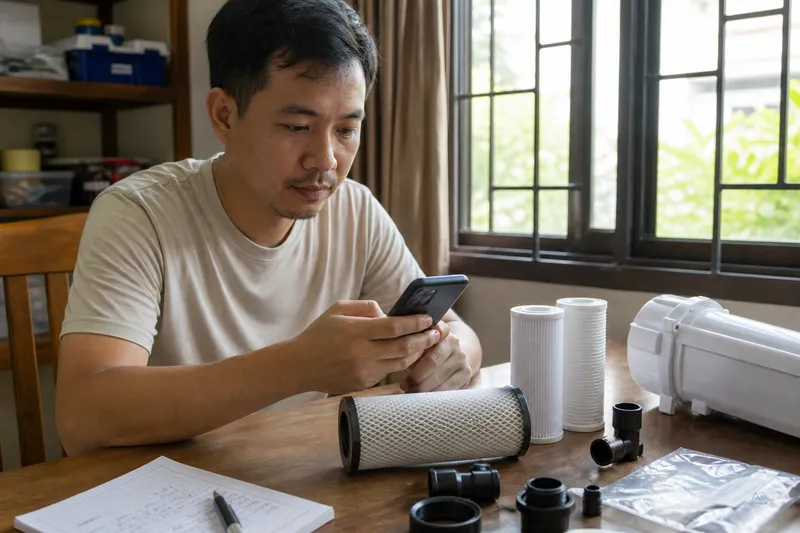
The machine did not secretly turn against you. The reorder window simply closed while nobody was watching. Open the spare parts path while you still have time — local, claim-safe, and Yangon-reachable, before the queue forms at your own tap.
A calendar reminder now is a smaller task than a panic message later — send the photos, then set the reminder.
Message on Viber, request a quote, or take the showroom path.
Related products
Related solutions
More guides: Solutions guides